


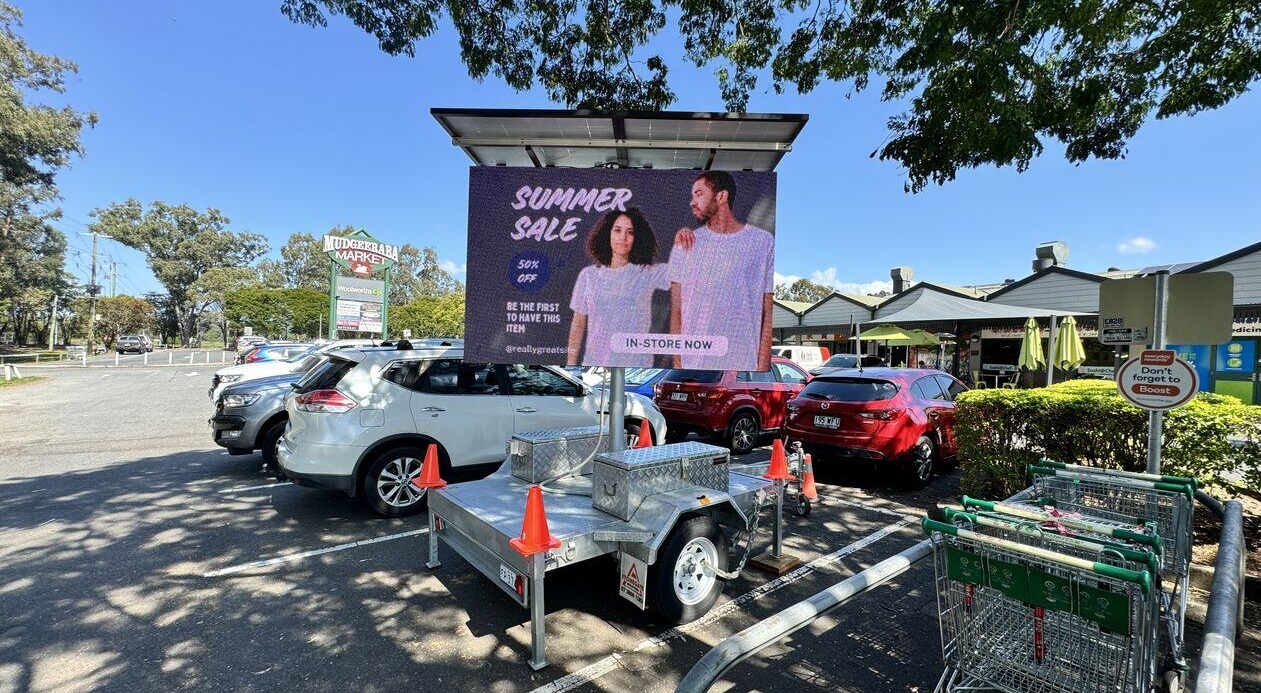
A solar advertising trailer is a mobile billboard trailer with an LED screen powered by solar panels and an onboard battery. It gives you the presence of a fixed billboard without a long-term lease. This guide explains how the technology works, where you can place a trailer in Melbourne, and which permits and rules to check before you commit.
What Is a Solar Advertising Trailer?
A solar advertising trailer (also called a solar LED trailer or digital advertising trailer) is a towable unit fitted with a high-resolution LED screen. Because it sits on its own trailer, it can be towed to a site, set up and moved again when your campaign needs a new location.
Because the screen is digital, you can run video, animation and rotating messages, and change your message without reprinting or reinstalling panels. That makes trailer advertising useful for campaigns where timing, location or creative may change.
How Solar Power Keeps the Screen Running
The system is simple. Solar panels charge an onboard battery bank, and the battery bank runs the LED screen. Because it doesn’t rely on a generator, a solar trailer runs quietly, with no generator noise or fuel on site. That can make placements easier in sensitive areas and suits campaigns with a sustainability message. Australia’s growing use of solar is tracked by bodies such as the Clean Energy Council.
Run time isn’t fixed. It depends on:
- Screen brightness: brighter content draws more power.
- Season: shorter winter days mean less charging time.
- Weather: heavy cloud reduces what the panels collect.
Solar trailers can run without mains power. How long depends on screen brightness, weather and season, so we recommend mains backup for long or overnight placements.
Solar vs Mains vs Generator Trailers
| Solar | Mains | Generator | |
| Noise | Very quiet | Very quiet | Audible engine noise |
| Fuel | None | None | Fuel needed on site |
| Site needs | Open, sunny position | Access to a power point | Space for the generator and fuel |
| Best for | Short to mid-length placements with no power access | Long or overnight placements | Remote sites with no other option |
Many campaigns combine solar with mains backup so the screen keeps running when sunlight is limited.
Where You Can Place an Advertising Trailer in Melbourne
The right site depends on who you want to reach and who controls the land. Common options include:
- Private land and car parks (with the landowner’s permission)
- Event grounds and festival sites
- Construction sites
- Land estates and new developments
- Shopping centre precincts
Roadside and council land need approval before a trailer can be placed.
Permits and Rules to Check Before You Book
Rules vary by location, so check these before locking in a site:
- Council local laws and permits: Roads, footpaths and council land usually need a council permit. Private land needs the landowner’s permission.
- Arterial roads: These may also involve the Department of Transport and Planning.
- Elections: The Victorian Electoral Commission (VEC) doesn’t allow mobile billboards or signs attached to vehicles within 100 metres of a voting centre’s designated entrance. All electoral material must be authorised. See the VEC campaigning page. We help check what’s needed before you book.
Best Campaigns for a Solar Trailer
A trailer works best when your audience is in one place for a while. Good fits include:
- Elections and advocacy campaigns, at approved sites away from voting centres
- Real estate and land estates
- Events and festivals
- Councils and community announcements
- Construction projects
- Retail launches and promotions
For an example of a solar trailer in a campaign, see the Environment Victoria case study. For help choosing sites and timing, see our outdoor media planning services, and our audience measurement and analytics page explains how we report on campaigns.
Trailer or Truck?
A trailer stays at one site for extended exposure, while a digital billboard truck drives a route for moving, city-wide coverage. Many campaigns use both, and for campaigns beyond Victoria, we also offer mobile billboards across Australia. Our trailer vs truck guide compares the two in detail.

FAQs
How does a solar advertising trailer stay powered?
Solar panels charge an onboard battery bank, which runs the LED screen. Run time depends on screen brightness, weather and season, so mains backup is recommended for long or overnight placements.
How long can an advertising trailer stay at one location?
Most placements run from a single day to several weeks, depending on the site, its approvals and your campaign.
Do I need a permit to place an advertising trailer in Melbourne?
On private land you need the landowner’s permission. Roads, footpaths and council land usually need a council permit, and arterial roads may also involve the Department of Transport and Planning. We help check what’s needed before you book.
Can advertising trailers be used for political campaigns?
Yes, at approved sites. Victorian Electoral Commission rules don’t allow mobile billboards or signs attached to vehicles within 100 metres of a voting centre’s designated entrance, and all electoral material must be authorised.
Should I use a trailer or a digital billboard truck?
A trailer stays at one site for extended exposure, while a truck drives a route for moving, city-wide coverage. Our trailer vs truck guide compares the two in detail.
Planning a Solar Trailer Campaign?
Call 1300 289 788 or get a free quote. Our LED screen trailer hire in Melbourne page has options and specs. And remember the STT Rate Guarantee: if you find a better rate, we’ll beat it!